

Forests are a major asset in the fight against climate change, with the ability to absorb and store gigatonnes of CO2. Despite this, forests are constantly cleared for timber, not only removing the ability to store CO2 but also releasing their stores back into the atmosphere.
Arbonics was founded to solve this very problem, providing landowners with an alternative means to generate returns from their forests through carbon credits. Founded in 2022 by Kristjan Lepik and Lisett Luik, two accomplished business leaders, the ESG FinTech company leverages technology to drive innovation in forestry.
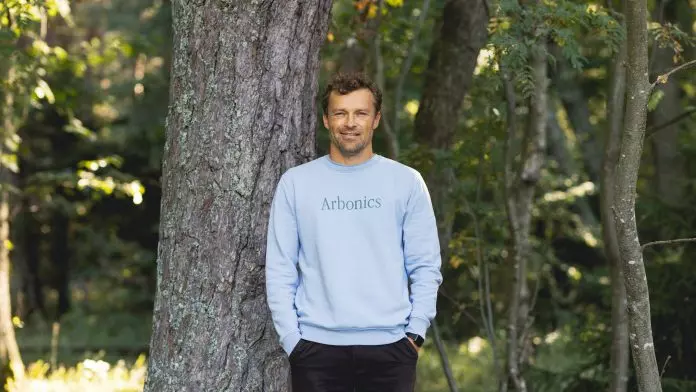
Lepik reflects, “Nature is more systematic than we expect. The question now is: how can we measure, understand, and support it?”. The idea for Arbonics came to Lepik after witnessing the clear-cutting of an old forest on one of Estonia’s islands. Not only did the destruction of such a beautiful landscape trouble him, but he was also confused by the financial decision. The sawmills were located on the mainland, which meant costly transportation. Yet, for the landowner, this was the only viable means to generate income from the land.
Lepik observes,“When you look into it, cutting down forests is often the only way for landowners to earn from their land—even in advanced economies like Europe. That simply doesn’t make sense. Our mission is to change that by creating a more sustainable model. Rather than labelling landowners as ‘bad’ for harvesting timber, we provide them with an incentive to preserve their forests by offering income to keep them standing”.
Generating carbon credit supply is only half of what Arbonics is doing. Most importantly, it is reshaping how we understand and value forests. The company currently operates in four European countries: Estonia, Finland, Lithuania and Latvia. It is also expanding across the continent, planning to enter five new markets in 2025.
Lepik explained that Europe is a great starting point for the platform as land ownership is widely distributed, with families often owning up to 20 hectares. This setup makes it easier to connect with landowners and demonstrate the value their land can offer.
How does Arbonics work?
The company’s ultimate goal is to remove one gigatonne of CO2 from the atmosphere– an ambitious goal for a team of 30, given that global emissions hover around 36 gigatonnes annually. The team aims to reach this goal through its nature-based carbon removal (CDR) credits. These credits are verified under Verra, the leading standard for certifying carbon credits, and are sold to businesses looking to offset to meet their emission targets.
Arbonics does this by supporting landowners with planting on their empty plots of land. Its research shows that 14 million hectares of abandoned land across Europe has the potential to add €2.2bn to the European economy through afforestation. Through a free suitability assessment, landowners learn what trees can be grown on their land and how much CO2 it could store. Once everything is agreed, the land is allocated to a project. Then, in partnership with Verra, Arbonics supports the afforestation process. Once the forest has grown, the landowner receives credits.
What makes it an even greater option for empty plot owners is how quickly they can earn returns. Planting a forest is costly, and often requires up to 70 years for trees to mature enough for timber sales. However, within just five years, the forest can begin generating revenue through CDR credits.
“An empty area doesn’t do much for the planet. But a forest benefits the environment for the next 50 to 70 years. Plus, starting in year five, it can begin generating carbon credit revenue, and by year 10, you’ve recouped your planting costs.”
Trust and accountability are core tenets of Arbonics. As such, they are embedded in the technology it employs. Arbonics’ comprehensive data models monitor forest growth and success, drawing on data from landowners, satellites, remote sensors, and more. This allows the company to demonstrate that its landowner partners are on track to sequester over 600,000 tonnes of carbon.
What sets Arbonics apart is its focus on data. As Lepik explained, “Our unit of measurement is a hexagon with 5m sides, and for each one, we analyse 50 data layers, including underground metrics. This creates a complex model, offering buyers a fully transparent, detailed, and granular view of past, present, and future conditions. That level of precision is a game changer.”
This level of transparency has proved very popular with corporate carbon credit buyers. Lepik noted that when they see how the technology works, they are almost instantly interested in purchasing the credits.
Data, not AI, is the way to fix climate change
Leveraging nature-based data from forests will be profoundly impactful in the fight against climate change. Lepik noted, “I struggle to see AI as the solution to climate change. Often, it’s the work of data science—understanding how soil functions through the insights of soil scientists. My confidence lies much more with data scientists”.
Lepik added that this collaborative approach is precisely what Arbonics is built for. The platform brings together an ecosystem of specialists—soil scientists, forestry experts, and data scientists—supported by geoinformatics professionals who integrate these insights to make the system function seamlessly. “This work sits at the intersection of many disciplines, and it’s not about needing AI; it’s about humans working together and becoming smarter in this area. We think globally: currently, forests store around one gigatonne of carbon per year. With our datasets and systems applied worldwide, that number could rise to 10 gigatonnes annually, addressing about a fifth of the climate challenge”.
Demonstrating the importance of data as a tool in the climate fight, Arbonics recently launched a new solution that redefines how we assess the lifecycle of a forest. Lepik highlighted that very little is known about what happens to a forest when it dies naturally, as most data focused on their early lifecycle stages. This gap inspired the team to gather information on all 1.7 million land parcels in Estonia, creating an ultimate dataset for forest research.
As each forest is different, each landowner has their own tailored plan. Through its data network, which includes local sources, Arbonics assesses the forest’s carbon reserve and how it compares to others in the region. On top of this, it provides a customised plan to promote carbon sequestration and maximise the landowner’s carbon income. The solution was developed in collaboration with local scientists, leveraging their expertise to ensure its effectiveness.
“For the first time, landowners can get answers to questions like, ‘I have this type of soil and that type of forest; what will happen to it. This is now grounded in smart data that we can build. Since the launch, the response has been overwhelming—hundreds of landowners have received our reports, and many have already signed up because it simply makes sense to them.”
On a concluding note, Lepik reflected, “I believe everyone understands that more forests are a good thing. People everywhere love forests, but nobody knows exactly how to do it. So, we’re doing just that—bringing more forests to every country”
Keep up with all the latest FinTech news here
Copyright © 2024 FinTech Global