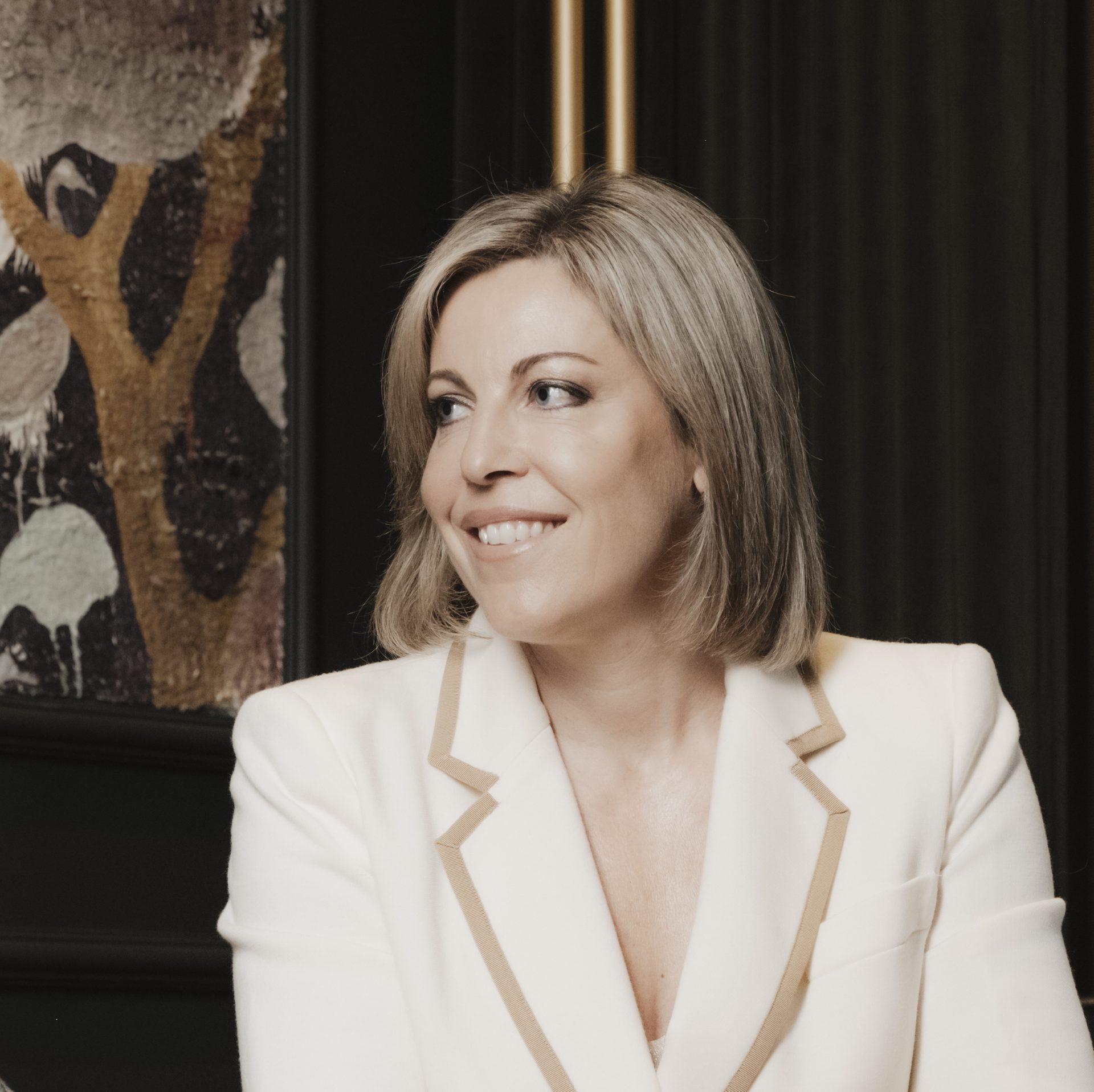
In the wealth management space, the rise of WealthTech has helped to digitise countless products and portals. Founded in 2017, Belgium-based myFaro is now changing the game: it is bringing digitisation to the financial advisory market.
According to Michelle Bovy, CEO and co-founder of myFaro, independent advisors operate across banking investments, investment-linked insurance contracts, pension solutions and private equity allocations – often within complex tripartite agreements between depositary, insurer and asset manager.
Most tools, she outlines, solve one vertical problem. myFaro, on the other hand, acts as a horizontal infrastructure layer that unifies front office, compliance, underwriting and servicing into one structured ERP environment. Bovy states succinctly, “We are not another feature. We are an operating system.”
Standing out in the wealth management industry often requires a business to deal with an unmet need considerably better than its competition. For myFaro, the business doesn’t just consolidate data, it embeds the full advisory lifecycle across product types into one workflow engine.
Bovy remarked, “Independent advisors traditionally must follow different onboarding, compliance and underwriting flows depending on whether they are advising on investmentlinked insurance contracts, banking investment portfolios, pension vehicles and private equity participations. This complexity becomes unmanageable when firms scale.”
myFaro has made it its aim to abstract those differences. From onboarding to compliance, underwriting and ongoing servicing, Bovy claims workflows are product-aware and regulatoraligned – without the advisor having to manually navigate regulatory logic. This means the company is operationalising multi-product advisory end to end.
Scaling advisory
A key challenge for many WealthTechs today is to make advisory scalable. This is something which Bovy believes myFaro already achieves.
“Scalability is not about selling more products. It is about embedding process integrity,” said Bovy. “Advisors must capture accurate client data, deliver correct documentation, secure compliant signatures and prove suitability to the regulator.”
With this considered, the myFaro CEO stated that saving documents in folders or relying on email is no longer sufficient.
She said, “myFaro embeds compliance directly into workflow automation. Advisors are guided through intuitive, structured processes — together with their clients — while regulatory logic operates in the background. More business in less time, with less friction and less compliance anxiety – this is true scalability.”
Advisor-client collaboration
Advisor–client collaboration is not peripheral to myFaro’s model — it is foundational. As Michelle Bovy puts it plainly: “It is central.”
She is clear that much of the industry still treats collaboration as an afterthought. “Many platforms serve advisors. Some provide read-only portals to clients. Very few create structured collaboration environments,” she says. Digitisation alone, in her view, does not equal partnership. A portal may distribute information, but it does not necessarily create shared accountability.
myFaro was designed to change that dynamic. The platform enables secure, traceable, regulator-ready collaboration between advisor and client in a single shared environment. Structured data requests reduce ambiguity. Secure document and data exchange build confidence.
Full portfolio visibility across asset classes grounds advice in a comprehensive view of a client’s financial life. Digital onboarding, sales, compliance, and financial planning workflows ensure that each interaction is embedded within a coherent and controlled process. Timestamped confirmations create an auditable record of decisions — when they were made, and on what basis.
For Bovy, the rationale is simple: “Financial advice is relational. Technology should strengthen that relationship — not fragment it.”
Model portfolios
Model portfolios, in Michelle Bovy’s view, are not about standardisation for its own sake — they are about strengthening independence through structure.
“myFaro allows advisors to design model portfolios per client type, combining multi-supplier banking and investment insurance solutions within predefined compliance logic,” she explains.
The result is twofold. First, advisors can articulate value quickly and consistently. A well-designed model portfolio shortens the distance between strategy and implementation, allowing client conversations to focus on suitability and long-term objectives rather than administrative complexity. Second, independence is preserved — and provable. Because the logic is predefined and embedded within compliance parameters, portfolio construction becomes both repeatable and audit-ready.
For Bovy, the larger point is scale. “We enable independence at institutional scale,” she stresses.
Data aggregation as infrastructure
Why does myFaro treat data aggregation as infrastructure rather than a feature?
Bovy said, “Because automation without reliable data is dangerous in a regulated market. We integrate via APIs where possible and structured formats such as CSV where necessary. Data is harmonised, validated and enriched before entering operational workflows.
“More than 1,000 structured data points per client can be managed within the system.
Single data entry at advisor level becomes the foundation of compliance, underwriting, reporting and profitability intelligence.”
Bovy states the point succinctly: without reliable data, automation becomes fiction.
Structural opportunities
The structural opportunity, in Michelle Bovy’s view, sits upstream — and too many institutions are still looking downstream.
“Many insurers have digitised underwriting. Few have truly digitised distribution enablement,” she says. In other words, product engines may be modern, but the advisory workflows feeding them often remain fragmented. That fragmentation carries a cost. “If advisory workflows remain disconnected upstream, downstream integration stays expensive and inefficient.”
myFaro positions itself as an infrastructural layer rather than another endpoint. “We provide a one-to-many infrastructure model,” Bovy explains. “Insurers can integrate once with our layer instead of connecting to multiple CRM or PMS systems individually.”
For insurers and wealth managers serious about B2B2C, the message is direct. “True B2B2C strategy requires investing in the advisor’s operational backbone — not just in product portals. The path of least friction wins.”
Buy-and-build
How does myFaro support buy-and-build strategies? “In consolidation environments, operational complexity reduces margins,” Michelle Bovy says. Acquired firms arrive with their own workflows, compliance interpretations, and product preferences. Left unmanaged, that diversity erodes efficiency and delays integration. Scale, in other words, becomes heavier rather than more profitable.
myFaro’s role is to introduce structure without erasing identity. “We standardise operational playbooks while preserving local identity,” she explains. In practical terms, that means uniform onboarding workflows, embedded KYC processes, and centralised compliance visibility across the group. It also extends to intelligence: group-, client-, and product-level profitability insights that allow leadership to see where value is being created — and where it is leaking. Rapid integration capability ensures newly acquired firms can be aligned quickly without paralysing day-to-day operations.
All of this, Bovy stresses, accelerates integration and supports EBITDA expansion.
“Infrastructure becomes a value-creation lever,” she says.
Boosting margins and integrating AI
In the critical area of boosting operational margins, Bovy makes clear myFaro embeds RevOps intelligence directly into the infrastructure layer. From this, advisory firms gain profitability per client, cost-to-serve visibility, pension limit monitoring, revenue-per-product tracking and bulk compliance orchestration.
“This reduces reliance on spreadsheets or fragmented BI projects,” said Bovy, who added that the firm transforms operational data into strategic insight.
On a similarly critical area – integrating AI – Bovy made clear AI must operate within regulatory integrity.
She said, “We integrate AI to enhance data validation, detect anomalies in aggregation, enrich documents contextually, integrate reliable external data feeds and support intelligent servicing workflows.”
Put simply, Bovy makes clear that AI strengthens accuracy and efficiency without bypassing compliance frameworks. “AI should reinforce infrastructure — not replace judgment,” she said.
The long-term version
What is MyFaro’s long-term version? According to Bovy, advisory will remain essential – especially in what is becoming an increasingly complex fiscal and legal environment.
However, Bovy stresses that advisors without structured infrastructure will struggle. “The next wave of WealthTech is not about more features. It is about operational enablement. By unifying data, workflows and compliance into one horizontal infrastructure layer, we allow advisors to focus on what truly matters. And yes — we bring back the fun in financial advice,” she concluded.
The full WealthTech100, including profiles on each company, can be found here.