Harvest and fincite have published the fourth edition of the WealthTech Radar 2026, a co-authored industry report developed alongside 12 domain experts from firms including AllUnity, DWS, Morningstar, Upvest, and wealthAPI.
The report delivers a clear verdict: European banks must move beyond strategy documents and into demonstrable execution — or risk being left behind.
The stakes are considerable. With an estimated $90.5 trillion in global high-net-worth individual (HNWI) wealth in play, the cost of inaction is no longer abstract. Regulators want evidence of progress, and clients increasingly expect financial systems that simply work. According to the report, the industry has moved past the era of pilots and proof-of-concepts, with five execution priorities now defining competitive positioning across the sector.
The five priorities identified are cloud resilience, asset tokenisation, direct indexing, advisor-ready wealth aggregation, and AI at scale. Each is assessed not on its theoretical promise, but on whether institutions can deliver measurable outcomes today.
On cloud resilience, the report’s special topic chapter is unambiguous: what matters in 2026 is not where data is stored, but whether firms can demonstrably restore critical workloads within defined recovery time and recovery point objective windows. The ECB has been explicit in its expectations, and boards are urged to treat cloud resilience as a revenue concern rather than an IT compliance exercise.
Tokenisation has similarly shifted from narrative to infrastructure. The WealthTech Radar tracks institutional programmes that have entered production — covering cash and settlement mechanics, tokenised bonds and funds, and collateral mobility models. The short-term payoff lies in faster settlement and more flexible collateral, provided custody, interoperability, and governance frameworks are embedded from the outset.
Direct indexing, whilst technically mature, faces structural constraints in Europe. Fractional-share legalities, tax asymmetries, and best-execution economics limit realistic retail scale in 2026. The opportunity remains real, the report notes, but only where mandates are sufficiently large and client preferences justify the associated service wrapper.
Wealth aggregation is framed as a growth lever hiding in plain sight. Next-generation clients expect a consolidated, actionable view of all their assets, yet most relationship managers still lack the tools to deliver it. Banks that close this gap stand to defend and grow wallet share throughout the wealth transfer period.
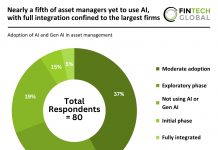
On artificial intelligence, the report draws a sharp line between ambition and delivery. Whilst 71% of wealth management executives identify digital-first capability as critical to retention, only around half currently offer AI-supported client profiling. The report sets out three prerequisites for moving from proof-of-concept to frontline outcomes: data layer quality, model governance, and workflow integration — in that order.
Harvest deputy CEO Delphine Asseraf said, “Artificial intelligence does not replace people — it amplifies their decision-making capability.”
fincite chief commercial officer Paul Kammerer said, “Clients move fast — Wealth Management solutions must connect even faster.”
The WealthTech Radar 2026 is available to download for free.
fincite is a WealthTech software provider and recipient of the Fintech Germany Award 2025, WealthTech100 2025, and ESGFinTech100 2025 recognitions. The company has been part of the Harvest Group, headquartered in Paris, since 2025, and employs more than 60 people across more than 15 nationalities.
Copyright © 2026 FinTech Global