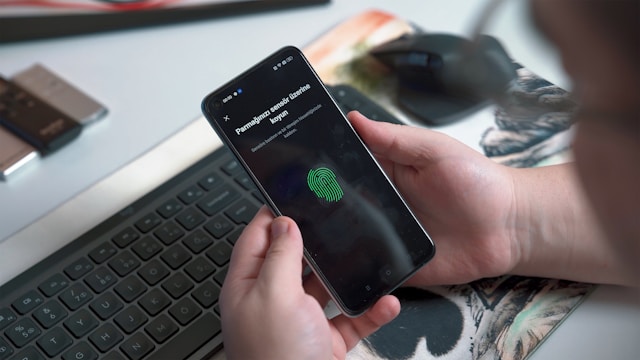
Aevi, a payments orchestration company, has published new research showing that more than half of UK consumers remain cautious about biometric payments due to concerns over how their data is handled.
The study, which surveyed 3,000 adults across the UK and US, found that 52% of UK respondents said privacy and potential misuse of data by private companies would make them hesitant to adopt biometric payments. By comparison, only 32% pointed to worries about government access or surveillance as a deterrent.
The picture looks different in the US, where concern about government access climbs to 44%.
Age emerged as the sharpest dividing line in the findings. Trust levels are highest among the youngest adults, with 80% of 25- to 34-year-olds saying they trust companies to safeguard their biometric data. That confidence drops to 56% among 35- to 44-year-olds, then falls further to 32% for 45- to 54-year-olds, a level that holds broadly steady through to retirement age, with 29% of over-65s expressing the same trust.
Familiarity with the technology follows a similar pattern. Nearly all adults aged 25 to 34 (97%) said they were aware of biometric payments, compared with just over half (51%) of those over 65. Older consumers were also far more sceptical of the value biometric payments offer, with half of over-65s saying the technology brings no clear benefit over existing payment methods, versus only 8% of those aged 25 to 34.
Rather than dismissing the technology altogether, the research suggests UK consumers are broadly open to biometric payments but want firmer guarantees around how their data is collected, stored and protected before adopting it more widely.
Aevi CEO Mike Camerling said, “As we’ve seen across our more recent consumer research, whether it’s about agentic commerce to digital currencies in in-person payments, control and trust remain consistent pressure points. Biometrics lands firmly within that same pattern. The technology itself might not be the barrier, but how it’s understood clearly is…how transparently it operates, and how much control people feel they retain.”
One UK respondent said, “I think it would have to be regulated and proven to be trustworthy before I use it.”
Another added, “If the data is guaranteed to be stored locally and in an encrypted format and not uploaded to servers, I would be more reassured.”
Copyright © 2026 FinTech Global