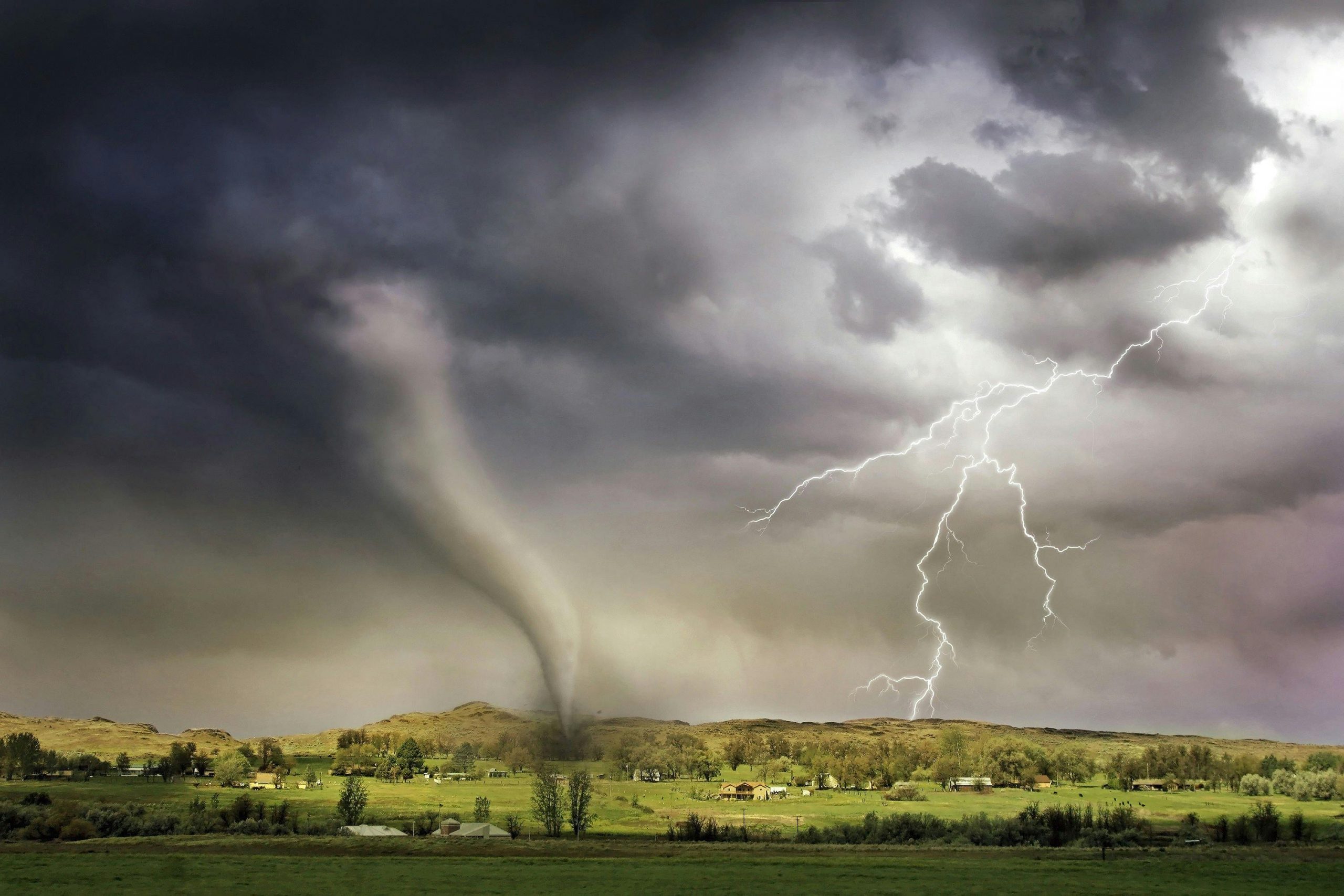
In the first half of 2025, natural disasters caused around $131bn in potential insurance losses globally. Only about $80bn of that was insured. What remains is an uninsured black hole larger than the GDP of Bahrain.
That gap is now becoming impossible to ignore, as the traditional balance between risk and protection is starting to slip.
Across the insurance market, extreme weather is reshaping where risk sits, how it is priced, and, increasingly, whether it can be insured at all.
To understand the intricacies behind this challenge, FinTech Global spoke with industry experts across insurance and technology to delve into why the protection gap is widening, and how insurers can respond.
A widening gap
The fundamentals of insurance are being tested by the sheer scale and volatility of climate-driven losses.
“Climate change is increasing the frequency and severity of extreme weather events,” said Roger Franklin, Head of Insurance at Edwin Coe LLP. “Economic losses from disasters are rising faster than the availability of insurance coverage.”
The result is a widening protection gap, particularly in regions where insurance penetration is already low. In many developing economies, most disaster-related losses remain uninsured.
Founder of Climate X, Kamil Kluza, explained the scale and uneven nature of the problem: “The insurance protection gap is getting worse, and it’s getting worse unevenly. Insured catastrophe losses have topped $100bn for six straight years. Swiss Re puts the annual real-terms growth rate at 5–7%. Yet more than half of all disaster losses worldwide still land on households, governments, and businesses rather than insurers. In emerging economies, coverage can run below 5%. Meanwhile, repeated mid-sized events like severe thunderstorms, flash floods, and wildfires are quietly doing as much cumulative damage as the headline hurricanes.”
But the strain is no longer confined to emerging markets. According to Judith Neumann, Global Head of Industry Advisory for Sustainability & Climate Resilience at Guidewire, the industry is approaching a more systemic tipping point.
“Extreme weather and its impacts like wildfires and wide-scale flooding are pushing the insurance business model of pooling risk to its limits,” she said. “When the certainty of damage is so high, the model is getting close to being broken.”
That pressure is already visible in market behaviour. “Insurers are pulling out of exposed regions, premiums are climbing, and the knock-on effects are hitting mortgage markets, property values, and public budgets,” explained Kluza.
Why traditional models are struggling
At the heart of the issue is a mismatch between how risk is modelled and how it is now behaving.
Traditional insurance was built on historical data and broad assumptions about geography. But climate risk is no longer behaving predictably.
“Traditional cat risk models draw too much on past events to predict future risks,” Neumann explained. “This simply is not useful enough when events are so unpredictable.”
The problem is becoming more granular, according to Kumar Dhuvur, Co-Founder & Chief Product Officer, ZestyAI.
“Catastrophe risk is not uniform,” Dhuvur suggested. “Two neighbouring homes in the same hazard zone can perform very differently during the same event.”
Factors such as construction materials, surrounding vegetation, prior damage and even roof condition can determine whether a property survives or is destroyed. Yet many models still treat entire regions as carrying the same risk.
As losses increase, those differences matter more. Without more precise, property-level insight, insurers risk mis-pricing exposure or withdrawing from markets entirely.
New models for a new risk landscape
Due to this dire need for a shift in method, alternative models are gaining traction, as traditional models buckle under the increasing strain of the modern world.
Parametric insurance is one of the most prominent. Unlike indemnity-based products, it pays out based on predefined triggers rather than assessed losses.
“Parametric insurance works differently because payouts are triggered by parameters such as wind speed or rainfall levels,” Franklin explained. “This allows funds to be released quickly and transparently, often within days.”
That speed is becoming critical. “When a catastrophe hits, there is no time for processing a claim,” Neumann said. “Parametric insurance delivers rapid relief to policyholders.”
Ross Sinclair, Founder and CEO at embedded insurance firm EIP, points to the operational impact. “If floodwaters reach a set depth, payment is released automatically, without a long waiting period or dispute,” he said. “This helps communities recover faster and reduces the strain of prolonged claims battles.”
Alongside parametrics, insurance-linked securities (ILS) are expanding the pool of capital available to absorb catastrophe risk.
“ILS instruments such as catastrophe bonds allow insurers to transfer risk to investors,” Franklin said. “By tapping into global capital markets, insurers can significantly increase the capital available to absorb losses.”
Whichever avenue insurers walk down to respond to the rise in extreme weather events, having the underlying data to back it up is crucial.
“Whether insurers are structuring parametric coverage or transferring risk through ILS, confidence in the underlying data is critical,” Dhuvur said.
Without accurate, granular data on hazard behaviour and property resilience, neither insurers nor investors can price risk effectively.
The role of capital and data
Capital markets are playing an increasingly important role in this shift, but their participation depends on transparency.
“Capital investors want a clear and quantifiable description of what they are providing capital to insure,” Neumann said. “Insurers need to raise their game in how they describe and analyse risk.”
This is where technology is becoming a differentiator.
Real-time data, satellite imagery and AI-driven analytics are allowing insurers to move beyond static models toward more dynamic, forward-looking assessments of risk.
For Dhuvur, that shift is essential. “The more precisely risk can be measured and described, the easier it becomes for both insurance markets and capital markets to allocate capacity where it is needed,” he said.
In other words, better data does not just improve underwriting. It unlocks capital.
From protection to prevention
At the same time, the industry is beginning to rethink its role in this chain more fundamentally. Rather than simply paying claims after an event, there is a growing focus on preventing losses before they occur.
For Dan Simmons, Managing Director at water leak prevention specialists Quensus, that shift is already underway.
“Extreme weather is making traditional reactive insurance harder to sustain,” he said. “Adhering to standards like the Joint Code of Practice is becoming a prerequisite for insurability in the UK.”
Technology is central to that transition.
“Our systems identify abnormal water behaviour and autonomously trigger a shut-off valve,” Simmons explained. “They protect the building without waiting for human intervention.”
This has implications not just for risk, but for insurability itself. “By integrating this technology into policies, complex risks such as high-rise or modular builds can become insurable again,” he said.
It also opens the door to new types of insurance products.“IoT data provides the ground truth for parametric insurance,” Simmons added. “If sensors detect a threshold breach, a payout can be triggered instantly to fund rapid mitigation.”
A system under pressure
For all the innovation, the scale of the challenge remains enormous. Business interruption claims linked to climate events are rising, disputes are multiplying, and for many companies, the consequences are severe.
In the US, some estimates suggest that up to 90% of businesses fail within two years of being hit by a disaster. For smaller firms in particular, delayed payouts or gaps in coverage can be existential.
And the impact isn’t confined to those businesses alone. Each failed company is a thread in the broader economic fabric.
Suppliers lose revenue, employees lose jobs, and creditors face defaults, creating cascading effects that can reverberate through insurers’ portfolios. A collapsing business ecosystem drives up claims, stresses reserves, and raises the likelihood of systemic losses.
In 2026, the protection gap cannot be treated like a throwaway figure. It is one final warning that the house of cards is beginning to wobble. If insurers cannot respond quickly with reliable coverage and prevention strategies, what starts as localised damage can threaten the stability of the broader market.
What comes next will depend on how effectively the industry can combine better data, new forms of capital, and a shift toward proactive risk management.
The longer these structural weaknesses are left unaddressed, the more unstable and untenable the situation will become.
Keep up with all the latest FinTech news here
Copyright © 2026 FinTech Global