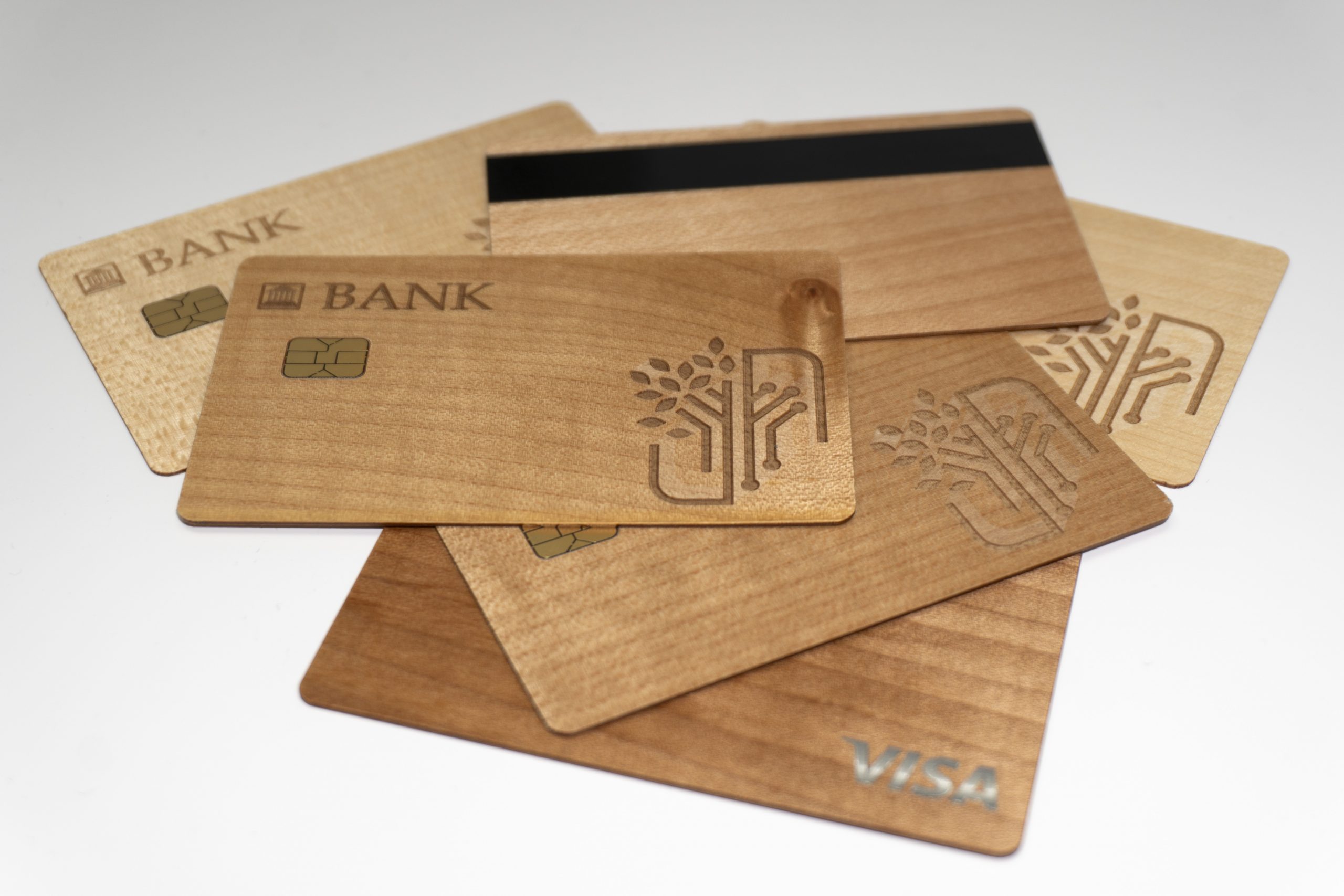
A third of UK consumers would consider switching their bank to access a wooden payment card, according to new research by Copecto, a sustainable payment card manufacturer, highlighting growing consumer appetite for environmentally conscious banking products.
The findings, published in Copecto’s “Premium with Purpose” report, reveal that 68% of consumers expressed interest in wooden payment cards. Of that group, half said they would switch banks to obtain one, representing roughly a third of all respondents. Nearly half of those interested (48%) would also upgrade to a premium account if it included a wooden card, a figure that climbs to 67% among the highest earners surveyed.
The report also found that 63% of consumers believe banks should be doing more to make their products and services sustainable. However, awareness of alternative card materials remains a significant obstacle, with more than half of respondents (56%) unaware before taking part in the survey that payment cards could be produced from anything other than plastic. Once informed about alternative materials and their comparable durability and functionality, preference for wood rose markedly, making it the most favoured card material overall.
Interest in wooden cards is particularly pronounced among affluent consumers, with between 72% and 76% of those earning between £40,000 and £150,000 annually expressing interest. Those earning over £150,000 showed some of the strongest preference for wood once they were presented with information about the alternatives. The research also found that 71% of consumers believe wood carries a lower environmental impact than metal, 63% view wooden products as more exclusive, 63% say the ability to stand out is important to them, and 54% would consider using a wooden card as a visible expression of their support for sustainability.
Copecto develops sustainably made payment cards from 100% FSC-certified wood, positioning itself as an alternative to conventional plastic and metal cards for banks seeking to align their product range with evolving consumer expectations.
Despite the broader shift towards digital wallets and app-based banking, the report suggests physical payment cards continue to carry weight in how consumers perceive and engage with banking brands. The research also points to growing consumer scepticism around environmental claims, with nearly seven in ten (69%) respondents suspecting brands may use sustainability as a form of greenwashing.
Copecto CEO Ashwini Pandey said: “Banking is evolving. Consumers increasingly expect sustainability to be visible within the products and experiences they interact with every day. But they are also becoming more sceptical of broad environmental claims, with nearly seven in ten (69%) respondents suspecting brands may use sustainability to greenwash.”
Pandey added: “For years, metal cards have been treated as the default symbol of premium banking, but consumers now want products that reflect quality, sustainability, and modern expectations as well. With more than two-thirds (68%) of respondents expressing interest in wooden cards, banks have a real opportunity to stand out and attract high-value customers.”
Pandey concluded: “Physical payment cards still play an important role in how consumers view their bank. As banking becomes increasingly digital, the physical touchpoints that remain have greater value in helping brands stand out and create stronger customer experiences. But consumers increasingly want tangible proof of sustainability, not just environmental messaging.”
Copyright © 2026 FinTech Global