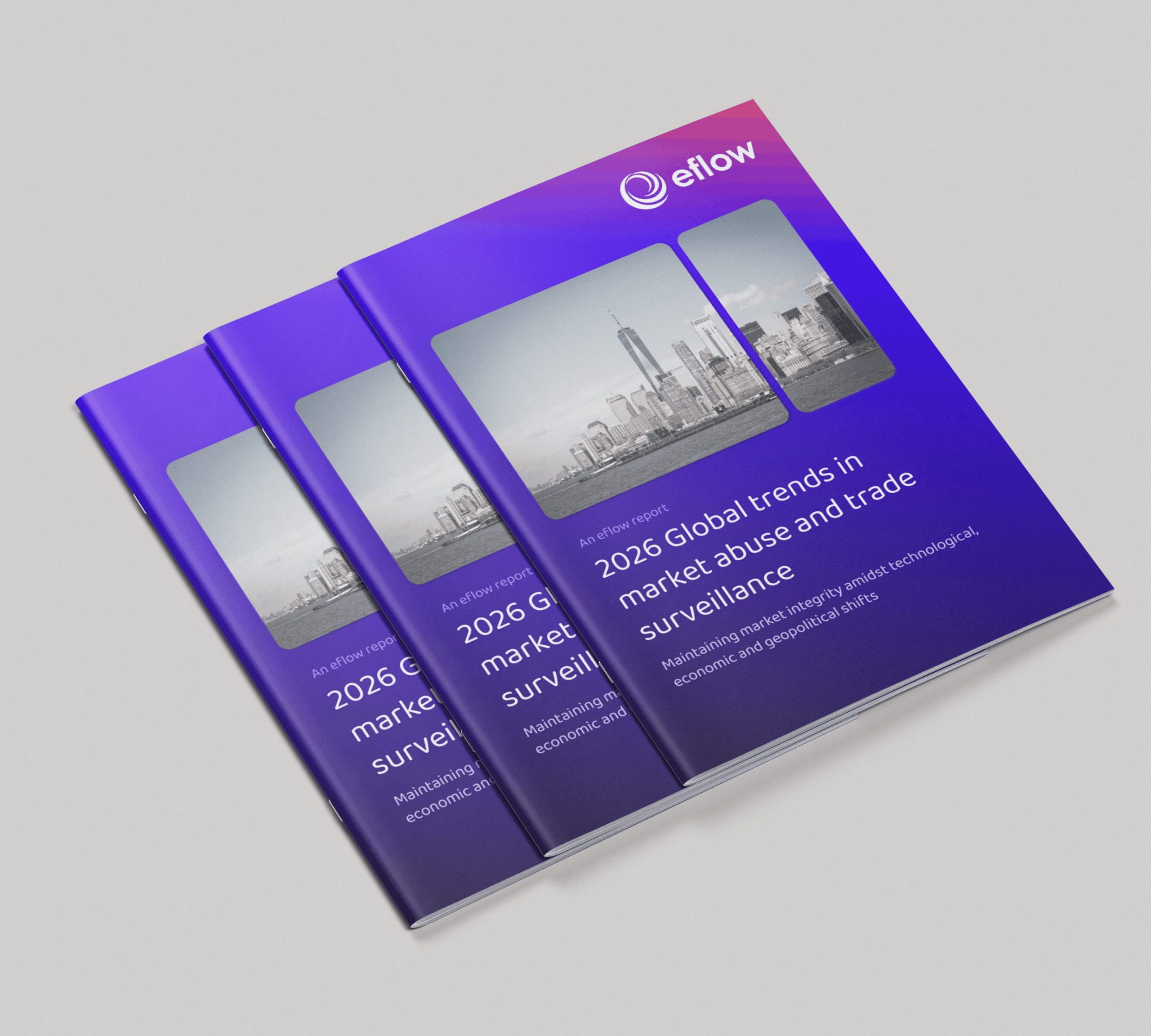
A new global report from eflow has revealed that the rapid expansion of artificial intelligence across financial services is expected to create significant compliance challenges in the coming year, with nearly seven in ten regulatory leaders warning that AI adoption will drive new risks for firms and regulators alike.
The company’s Global Trends in Market Abuse and Trade Surveillance Report 2026 surveyed 300 senior regulatory compliance decision makers across Europe, North America and APAC. The findings highlight a compliance environment increasingly shaped by technological transformation, regulatory uncertainty and geopolitical pressures.
According to the research, 69% of financial services firms believe the accelerated deployment of AI will introduce new compliance issues within the next 12 months. As financial institutions integrate advanced analytics, automation and AI-driven decision-making into their trading operations, compliance teams are facing mounting pressure to ensure surveillance systems evolve at the same pace as market activity.
Despite growing awareness of the risks and opportunities associated with AI, the report suggests that many organisations remain in the early stages of implementation. Only 16% of firms have fully deployed AI within their trade surveillance operations today. A further 31% are currently implementing AI across selected functions, while 24% plan to introduce AI-powered surveillance tools within the next 12 to 24 months.
The research also points to significant gaps in strategic readiness. Nearly three in ten organisations, representing 29% of respondents, currently lack a formal strategy for incorporating AI into their trade surveillance frameworks, or have no plans to adopt AI technologies at all.
Beyond AI, regulatory complexity continues to be a defining challenge for compliance teams. Almost two thirds of respondents, or 65%, identified increasing regulatory uncertainty as a major compliance risk. The concern is particularly pronounced in the United States, where 75% of firms cited regulatory uncertainty as a key challenge, compared with 63% in the UK.
Keeping up with regulatory change is another pressing issue, with 53% of regulatory leaders saying that adapting to evolving requirements around market abuse detection and trade surveillance remains one of their biggest operational concerns.
The report also highlights notable regional differences in how firms perceive emerging risks. Organisations in the United States are more likely than their UK counterparts to flag crypto markets and regulatory volatility as significant drivers of future compliance challenges. Integrating trade surveillance systems with electronic communications monitoring also appears to be a larger hurdle for US firms, with 58% reporting this as a key issue compared with 40% globally.
eflow co-founder and CEO Ben Parker said, “AI is now reshaping both how markets operate and how misconduct can emerge. Our 2026 findings show that firms clearly recognise this shift, but many are still building the foundations needed to deploy AI responsibly and effectively within their trade surveillance operations. At the same time, regulatory uncertainty and ongoing market volatility continue to place compliance teams under sustained pressure. Stronger collaboration between firms and regulators will be essential to ensure innovation can progress without undermining market integrity.”
The research also indicates a growing desire among financial institutions for closer engagement with regulators. Half of surveyed firms, representing 50% of respondents, believe stronger collaboration between regulators and compliance teams would be the most effective way to balance market integrity with financial innovation. Meanwhile, 47% say clearer communication around regulatory expectations and enforcement activity would help organisations better manage compliance risks.
As AI adoption accelerates across global markets, the report suggests that the future of trade surveillance will increasingly depend on how effectively financial institutions combine advanced technology with robust governance frameworks and stronger cooperation with regulators.
Find more on RegTech Analyst.
Keep up with all the latest FinTech news here
Copyright © 2026 FinTech Global